
Spring storms can send thousands of gallons of water racing across a roof in a matter of minutes. Few areas handle more runoff than open valleys, where two roof slopes converge and concentrate water into a narrow drainage path. Smart valley construction combines specialized materials, precise fabrication methods, and experienced workmanship to help roofs withstand repeated exposure to intense rainfall.
Installing Heavy-Gauge W-Valley Metal Liners to Channel Peak Hydrostatic Flow
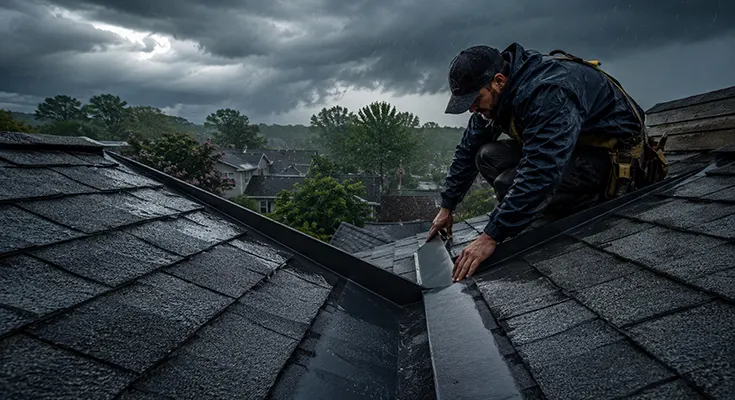
Open valleys must manage water moving at surprising speeds during heavy storms. Heavy-gauge W-valley metal liners create a defined drainage channel that helps direct runoff safely toward gutters while reducing the chance of water crossing from one roof plane to another. The raised center rib commonly found in W-valley systems acts as a barrier that improves flow separation during intense rainfall events. Rather than relying solely on shingles to handle concentrated runoff, experienced roof contractors often install durable metal valley liners capable of withstanding decades of water exposure. Many roof contractors in Trussville AL prefer heavier metals because thinner materials may distort over time under repeated thermal movement and weather stress.
Applying Self-Adhering Ice and Water Shield Membranes Beneath the Valley Flashing
Beneath every properly built open valley lies an additional layer of protection that homeowners never see. Self-adhering waterproof membranes create a secondary defense system directly against the roof deck, helping block moisture infiltration if water ever bypasses the surface materials.
Unlike traditional underlayments, these membranes seal around fasteners and conform tightly to roof surfaces. Reliable roof companies in Trussville AL frequently incorporate this extra protection because valleys remain among the most vulnerable locations for moisture intrusion during prolonged rain events.
Securing Concealed Cleats to Prevent Thermal Expansion Buckling in Open Valleys
Metal expands and contracts continuously as temperatures fluctuate throughout the year. Direct fastening methods can restrict movement and eventually create distortion, buckling, or separation within valley components.
Concealed cleat systems allow metal flashing to move naturally while remaining securely attached. Skilled roof contractors understand that controlling thermal movement helps preserve both appearance and performance, particularly in roofing systems exposed to Alabama’s seasonal temperature swings.
Utilizing High-Durometer Silicone Sealant Beds Along Shingle-to-Metal Junctions
Transitions between shingles and exposed valley metal require careful detailing. Water frequently follows small gaps, edges, and irregular surfaces that may appear insignificant during dry weather.
High-durometer silicone sealants help create flexible, weather-resistant connections where roofing materials meet. Professional roof companies near me often select advanced sealant products because they remain stable through repeated expansion cycles, UV exposure, and seasonal weather changes.
Executing Precise 45-Degree Miter Cuts to Prevent Capillary Water Draw
Water does not always move downhill in a predictable manner. Surface tension can pull moisture into narrow gaps through a process known as capillary action, allowing water to travel where gravity alone would not carry it.
Accurate miter cuts help minimize opportunities for water to migrate beneath roofing materials. Experienced roof contractors in Trussville AL pay close attention to these seemingly small details because proper cuts can significantly improve long-term valley performance.
Setting a Continuous Hemmed Edge to Stop Lateral Rain Migration Past the Valley
Wind-driven rain introduces challenges that standard drainage designs may not fully address. During severe storms, water can move sideways across exposed surfaces rather than flowing directly downward.
Continuous hemmed edges strengthen valley flashing while helping contain runoff within designated drainage channels. Homeowners researching roofing near me often focus on shingles, yet edge detailing frequently plays an equally important role in protecting vulnerable roof areas.
Blind-Fastening Metal Flashing Outside the Waterline to Eliminate Puncture Leaks
Fastener placement matters tremendously in open valley construction. Exposed fasteners located within primary water channels create unnecessary penetration points that may eventually develop leaks as materials age.
Blind-fastening techniques keep attachment points away from concentrated water flow zones. Respected roof companies in Trussville AL commonly use this approach because eliminating punctures within active drainage paths helps reduce future maintenance concerns.
Tapering Valley Widths from Top to Bottom to Accelerate High-Volume Discharge
Water volume increases as runoff travels toward the lower sections of a roof valley. Designs that remain the same width from top to bottom may restrict flow capacity during intense rainfall.
Carefully tapered valley configurations create additional room where runoff volumes become greatest. Forward-thinking roof contractors often incorporate widening drainage paths that encourage faster discharge, helping reduce ponding, overflow, and water backup during severe spring storms.
Precision Craftsmanship Turns Valley Systems Into Long-Term Water Management Assets
Open valleys represent some of the hardest-working components on any roofing system. Their ability to handle concentrated runoff depends on material selection, installation quality, and attention to technical details that many property owners never notice. Yellow Hammer helps homeowners evaluate valley performance, identify developing drainage concerns, and implement roofing solutions designed to improve water management during Alabama’s demanding spring weather conditions. Proper valley construction remains one of the most effective ways to protect a roof from long-term moisture-related damage.