In today’s competitive real estate market, listing your home online is just the first step. When potential buyers walk through your front door, they are not just evaluating square footage and location; they are making an immediate, subconscious emotional investment.
Staging is the critical bridge between a property and a sale. It is far more than just tidying up or decorating; it is a sophisticated marketing strategy designed to showcase your home’s best assets, maximize its perceived value, and allow buyers to visualize themselves living there. Implementing effective staging strategies is proven to increase the final sales price and significantly reduce the time a property spends on the market.
The Psychology of Staging: Why It Adds Value
Staging works because it appeals to the buyer’s aspiration. When a buyer walks into a vacant home, the rooms can feel cold, small, and uninspiring. They may struggle to perceive the scale of a bedroom or understand the function of a bonus loft.
Conversely, a home cluttered with personal items makes it difficult for buyers to mentally “move in” because they are constantly reminded that it belongs to someone else.
Professionally staged homes bridge this gap by creating an aspirational lifestyle. Staging defines spaces, highlights architectural features, and creates a warm, welcoming atmosphere. According to the National Association of Realtors (NAR), a significant percentage of buyers’ agents report that staging a home increases the dollar value offered by 1% to 5% compared to similar, unstaged homes. When you consider the price of a property, that small percentage investment can yield a massive return.
Core Strategy 1: The Power of Neutrality and Depersonalization
Before you can add style, you must create a blank canvas. The first and most crucial step in staging costs nothing but time: ruthless decluttering and depersonalization.
Your goal is to make the home feel like a high-end hotel—inviting, immaculate, and appealing to the broadest possible demographic.
- Declutter Everything: Clear off every surface. Kitchen counters, bathroom vanities, and coffee tables should be nearly bare. Pack away the excess kitchen gadgets, books, and collectibles. Clutter makes a room feel chaotic and significantly smaller than it is.
- Remove Personal Connections: Potential buyers should be focusing on the crown molding, not your family vacation photos, children’s artwork, or religious iconography. Take down personal photos and diplomas.
- Neutralize the Palette: While you may love your bold accent wall, deep burgundy paint can be a major turn-off for buyers who prefer serene spaces. Repaint walls in warm, universally appealing neutral tones—think soft greys, creamy off-whites, or light “greige” (grey-beige). This brightens the space and makes rooms feel larger and cleaner.
Core Strategy 2: Defining Spaces and Traffic Flow
Buyers need to understand exactly how each room in your house is intended to be used. A “mystery room”—a spare bedroom currently serving as a storage dump for boxes and exercise equipment—is a wasted opportunity to add value.
- Define Every Nook: If you have a spare room, stage it intentionally. Convert it into a dedicated home office, a serene guest bedroom, or a functional workout space. Even a small landing at the top of the stairs can become a cozy reading nook with the addition of a single comfortable chair and good lighting.
- Optimize Traffic Flow: Buyers must be able to walk easily through a room without dodging furniture. Staging requires arranging furniture to maximize the sense of space and create clear pathways. If a room feels crowded, remove oversized furniture. You want buyers to flow through the house naturally, focusing on the space, not the obstacles within it.
Core Strategy 3: Strategic Lighting and Ambiance
Lighting is perhaps the single most important element in effective staging. A dark home feels gloomy, dated, and neglected. A bright home feels cheerful, modern, and well-maintained.
- Maximize Natural Light: Open all curtains and blinds before showings. Ensure windows are professionally cleaned inside and out. If you have heavy drapes, consider replacing them with sheer panels that let light in while maintaining some privacy.
- Layer Artificial Lighting: Do not rely on a single overhead light. Layer your lighting to create warmth and depth. Use ambient lighting (ceiling fixtures), task lighting (under-cabinet lights in the kitchen, desk lamps in the office), and accent lighting (floor lamps in dark corners). Ensure every light fixture has working bulbs, preferably bright, warm LEDs (2700K–3000K).
- Sensory Staging: Go beyond the visual. Ensure the home smells clean, not heavily perfumed. Subtle, natural scents like light vanilla, citrus, or clean linen can be welcoming. Avoid overwhelming cooking odors.
Room-by-Room High-Impact Staging Tips
Focus your efforts on the rooms that offer the highest return on investment:
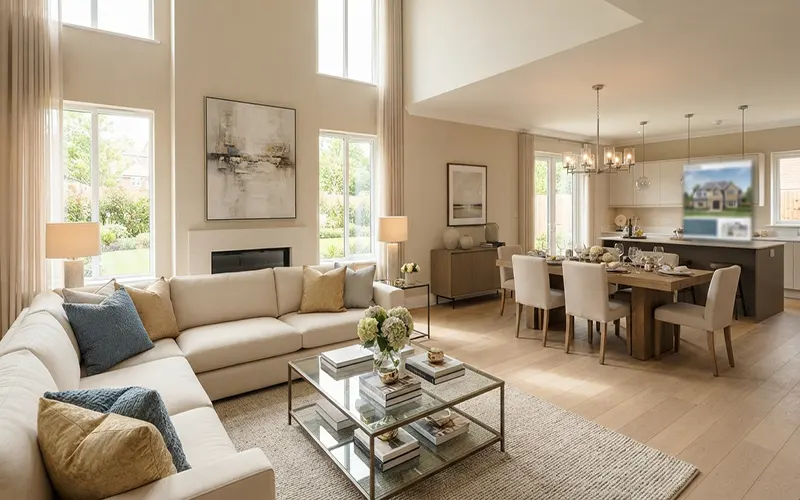
- Living Room: This is the primary gathering space. Arrange furniture (like a sofa and two chairs) to create a cozy, conversation-friendly grouping. Use a large area rug to define the space and ground the furniture. Add soft throw pillows and a blanket for texture.
- Kitchen: The heart of the home must be immaculate. Clear countertops completely—put away the toaster, coffee maker, and spice rack. If your hardware is dated, replace it with modern, neutral options (like matte black or brushed nickel). A bowl of fresh green apples or lemons adds a touch of organic color.
- Primary Bedroom: This should be a tranquil sanctuary. Use high-quality, crisp white hotel-style bedding. Keep nightstands clear except for a simple lamp and one book. Remove bulky dressers if they impede walking space.
- Bathrooms: These must sparkle. Remove personal toiletries from the shower and vanity. Use fluffy, folded white towels. A new shower curtain and clean bath mat go a long way. Ensure grout is scrubbed clean.
DIY vs. Professional Staging: Weighing the Options
The decision to stage yourself or hire a professional depends on your budget, timeline, and the property itself.
DIY Staging: For lived-in homes, homeowners can often handle the decluttering, depersonalization, and minor updates themselves. This involves investing in cleaning supplies, paint, and perhaps a few new decor accents (pillows, towels). This is a budget-friendly approach but requires objectivity and hard work.
Professional Staging: For vacant properties, luxury homes, or homes that have lingered on the market, professional staging is highly recommended. Stagers bring in rental furniture, art, and accessories that perfectly suit the style of the home, making it feel furnished and luxurious. While this has an upfront cost, it often pays for itself by commanding a higher final sales price.
Staging is not an expense; it is a strategic investment in the successful sale of your home. By neutralizing the space, defining functional areas, maximizing light, and creating an aspirational ambiance, you transform your property from just a house into a must-have home. Sellers who view staging as an essential step in their preparation checklist are positioning themselves to maximize their profit and sell faster in any market.