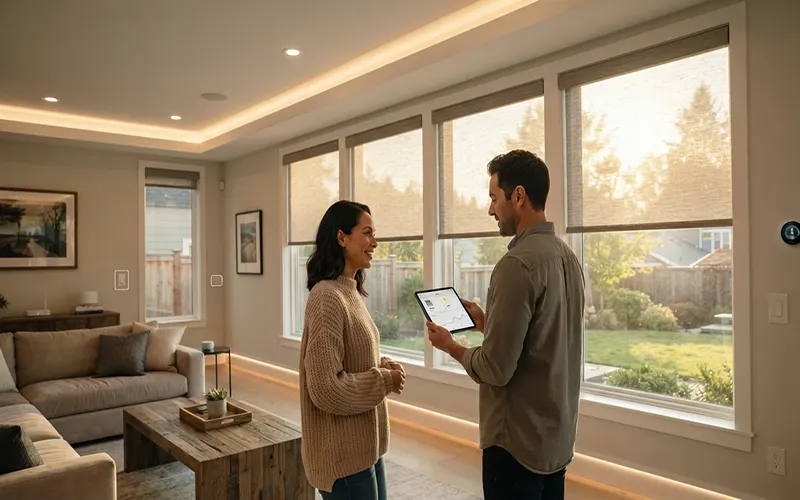
For many homeowners, the pinnacle of modern smart home living is the seamless harmony between artificial illumination and natural daylight. Imagine waking up to soft, ambient lighting while your motorized window shades gently rise to greet the morning sun, or having your home automatically adjust its shades and lights at dusk to maximize privacy and thermal efficiency.
While integrating smart lighting and automated window shades delivers unmatched convenience and luxury, it also requires a significant upfront investment. Understanding the true costs involved across various budgeting tiers helps you plan an upgrade that balances high-end comfort with financial realism.
Why Integrate Smart Lighting and Automated Shades?
Smart lighting and automated shades are rarely isolated upgrades; their true power lies in cross-system integration.
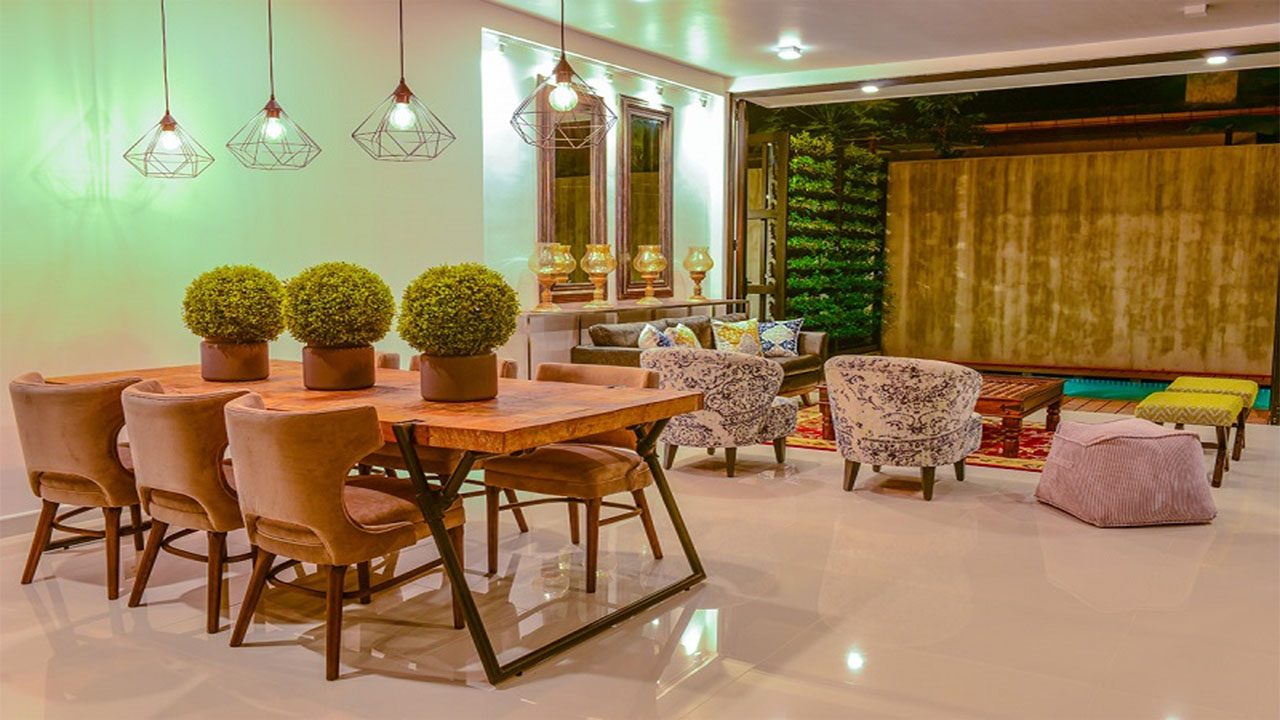
- Harmonizing Natural and Artificial Light: Advanced automation platforms allow your shades and lights to work in tandem. For example, on a scorching summer afternoon, your smart home can automatically lower south-facing blackout shades to block solar heat gain while gently dimming overhead lights to maintain a comfortable ambiance.
- Energy Efficiency: By intelligently managing sunlight and reducing unnecessary electrical lighting, integrated systems lower your monthly heating, cooling, and electricity bills.
- Everyday Convenience: Managing dozens of windows and light switches with a single voice command, geo-fence trigger, or automated schedule eliminates tedious daily routines.
Breakdown of Smart Lighting Costs
The cost of upgrading your home’s lighting depends heavily on whether you choose a wireless retrofit approach or a hardwired, centralized architectural system.
- DIY and Wireless Retrofit Switches (Budget-Friendly):
- Products like Lutron Caseta or smart bulbs (e.g., Philips Hue) allow you to replace standard wall switches without tearing open drywall.
- Cost: Individual smart switches generally run between $50 and $70 each. For a mid-sized home requiring 15 to 25 switches, equipment costs typically total $800 to $1,800.
- Hardwired Architectural Systems (High-End Luxury):
- Professional-grade systems like Lutron Homeworks or Crestron utilize centralized dimmer panels and specialized low-voltage keypads.
- Cost: Because these require extensive wiring, custom panels, and professional installation during a major remodel or new build, total costs for whole-home architectural lighting easily range from $8,000 to $20,000+.
Breakdown of Automated Window Shade Costs
Motorized window treatments are traditionally one of the most expensive components of a smart home due to custom fabric sizing and precision internal motors.
- Motorization Types & Power Sources:
- Battery-Powered / Wireless Rechargeable: Great for retrofits. Motors are built into the roller tube, powered by internal rechargeable batteries or solar panels.
- Hardwired Low-Voltage: The gold standard for new construction, providing constant power via concealed cabling and eliminating battery swaps.
- Fabric and Sizing Factors: Standard-sized bedroom windows using light-filtering fabrics are far more economical than massive, custom-width floor-to-ceiling glass expanses requiring heavy-duty dual roller mechanisms (combining sheer and blackout fabrics).
- Whole-Home Investment:
- Individual motorized shades range from $300 to $900+ per window depending on the brand (e.g., Lutron Serena, Hunter Douglas, Somfy) and fabric choice.
- For a typical 10-window home, expect automated shade investments to total $4,000 to $9,000+.
Integration, Hubs, and Labor Expenses
Bringing these two distinct technologies together requires a reliable control ecosystem and professional expertise.
- Smart Hubs and Ecosystems: You will need a central brain to coordinate routines between your lights and shades. Popular platforms range from local smart home hubs (like Apple HomeKit/Matter, SmartThings, or Home Assistant) to custom professional integrators (like Control4 or Josh.ai). Dedicated hubs typically range from $100 to $300, though professional systems carry higher hardware licensing fees.
- Professional Installation Labor: While smart switches and battery-powered shades are DIY-friendly, hiring an electrician or certified smart home integrator ensures safe wiring, flawless calibration, and clean aesthetic finishes. Hourly labor rates for certified integrators generally range from $100 to $200 per hour, or a flat percentage of project equipment costs.
Practical Tips to Optimize Your Smart Home Budget
You do not need to automate every room in your house simultaneously to enjoy the benefits of integrated lighting and shading:
- Prioritize High-Traffic Zones: Focus your initial budget on primary living spaces—such as the living room, kitchen, and primary bedroom—where you spend the majority of your time.
- Phase Your Installation: Start with wireless retrofit smart switches and motorized shades in the living room, then expand room-by-room over time as your budget allows.
- Leverage Wireless Ecosystems: Choose wireless protocols (like Lutron’s proprietary Clear Connect or open standards like Matter and Zigbee) to avoid costly drywall repairs and complex rewiring.
Installing integrated smart lighting and automated window shades represents a substantial financial commitment, but it is also an investment in long-term energy efficiency, daily comfort, and modern property value. By auditing your home’s windows and lighting circuits, choosing the right mix of retrofit or hardwired hardware, and phasing your installation thoughtfully, you can bring the luxury of synchronized natural and artificial light into your everyday life.