Rising residential electricity rates and unpredictable peak-hour energy spikes have made home energy management a top priority for eco-conscious homeowners and budget-savvy consumers alike. Traditional smart home devices—like basic programmable thermostats or manual timers—helped, but they required constant tweaking and lacked contextual awareness.
Enter artificial intelligence. Today, modern AI energy management systems utilize machine learning algorithms to automate your home’s power consumption, predict weather patterns, optimize HVAC runtimes, and shift heavy energy usage to off-peak hours. Here is your comprehensive guide to the best AI-driven systems designed to significantly lower your home electricity bills.
How AI Home Energy Management Systems Work
Unlike passive energy monitors that simply show you how much power you are using after the fact, active AI energy management systems use advanced algorithms to dynamically manage power in real-time.
- Machine Learning Algorithms: AI systems study your household’s daily routines, occupancy patterns, and thermal comfort preferences over time. They learn when rooms are actually in use and adjust heating, cooling, and appliance power accordingly.
- Predictive Weather & Tariff Integration: Cloud-based machine learning pulls local weather forecasts and your utility company’s dynamic Time-of-Use (TOU) rate schedules. If a heatwave is forecasted or electricity rates are set to spike at 5:00 PM, the system preemptively pre-cools or pre-heats your home when power is cheapest.
- Automated Load Shifting: The system coordinates high-draw appliances (such as EV chargers, heat pump water heaters, and pool pumps) to run exclusively during low-cost or high-solar-generation windows.
Top AI Energy Management Systems on the Market
Several leading platforms and hardware solutions stand out for their ability to slash residential utility bills through artificial intelligence:
1. Ecobee SmartThermostat with SmartSensors
Ecobee remains a gold standard for HVAC optimization. Utilizing built-in occupancy sensors and machine learning algorithms, the system automatically adjusts temperature settings based on whether rooms are occupied. Its Eco+ software suite features Community Energy Savings, which automatically shifts your heating and cooling away from peak grid demand hours, lowering bills while earning utility rebates.
2. Sense Home Energy Monitor
For whole-home insight, Sense uses advanced machine learning (device disaggregation) via a high-frequency current sensor clamped to your main electrical panel. It “listens” to the electrical signatures of individual appliances in your home—identifying your refrigerator, HVAC compressor, and dryer—and maps their energy consumption. The AI provides real-time alerts and insights into energy vampires, helping you isolate and eliminate wasteful power draws.
3. Span Smart Electrical Panel
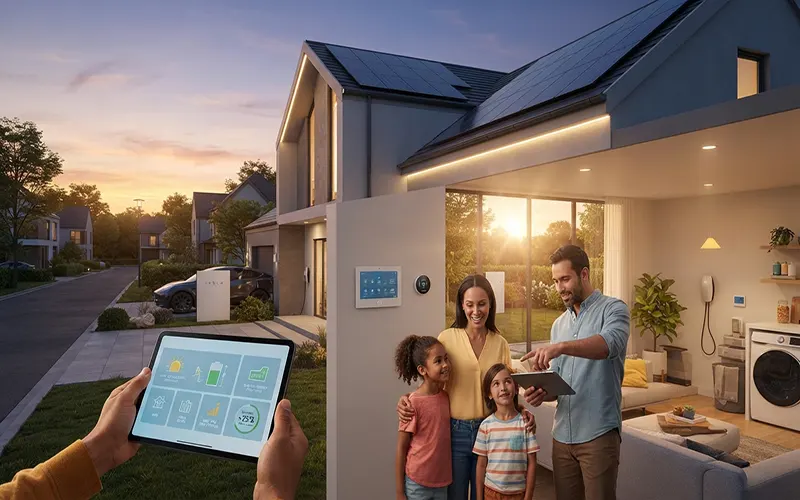
Replacing your traditional breaker box with a Span Smart Panel brings AI-driven energy management directly to the circuit level. Span integrates seamlessly with home solar arrays and battery storage systems. Its smart software uses predictive AI to automatically ration power during grid outages, optimize battery usage based on daily weather and utility tariffs, and allow users to turn individual circuits on or off via an app.
4. Schneider Electric / Wiser Home Ecosystem
Schneider Electric’s Wiser Home platform integrates smart plugs, room sensors, and circuit-level monitoring into a centralized AI hub. It uses automated load management to predict energy demand peaks and dynamically balance your home’s power consumption, making it an exceptional choice for homes with integrated solar or electric vehicle (EV) charging needs.
Key Features to Look For When Choosing a System
When shopping for an AI energy management system, look for capabilities that align with your home’s layout and your local utility provider’s billing structure:
- Time-of-Use (TOU) Rate Optimization: Ensure the system can sync with your utility provider’s dynamic rate schedule to automatically capitalize on cheaper off-peak hours.
- HVAC Predictive Automation: Because heating and cooling account for over 50% of an average home’s energy consumption, an AI thermostat with adaptive learning is your highest-ROI investment.
- Whole-Home Circuit-Level Tracking: If you want granular data on heavy appliances, look for smart panels or whole-home monitors like Sense rather than just individual smart plugs.
- Solar and Battery Compatibility: If you have rooftop solar panels or home battery storage, choose an ecosystem (like Span or Schneider) that uses AI to optimize when to store solar energy, use it locally, or sell it back to the grid.
Actionable Steps to Maximize Your Savings
Deploying hardware is only half the battle; maximizing your savings requires proper setup:
- Input Your Utility Rate Structure: Spend time programming your utility provider’s exact tiered or TOU rate schedules into your AI thermostat or energy app so the algorithm can accurately calculate cost-saving opportunities.
- Automate EV and Heavy Appliance Scheduling: Let your AI system or smart charger handle your electric vehicle charging overnight during deep off-peak hours rather than plugging in the moment you arrive home.
- Trust the Learning Period: Give new AI systems at least two weeks of uninterrupted operation to accurately map your household’s patterns before manually overriding schedules.
Adopting an AI energy management system turns your home from a passive energy consumer into an intelligent, cost-saving asset. By leveraging machine learning to optimize heating, cooling, and appliance runtimes around dynamic utility rates, you can dramatically reduce your utility bills without ever sacrificing daily comfort. Audit your home energy needs today, invest in a smart thermostat or energy monitor, and let artificial intelligence start working for your wallet.