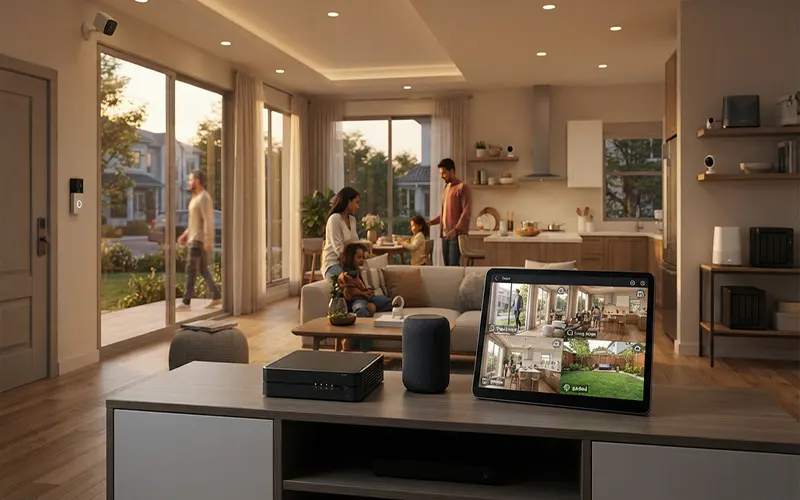
For years, mainstream home security cameras have relied on a cumbersome, cloud-dependent model: your camera records a motion event, uploads the raw video footage to a remote cloud server, waits for the cloud’s AI to analyze whether it is a person or a stray cat, and finally sends a notification back to your phone.
The result? Frustrating multi-second delays (latency), privacy vulnerabilities, and mandatory monthly subscription fees just to review your own footage.
Fortunately, a major shift is underway. Modern low-latency smart home security cameras utilize local edge processing, analyzing video feeds right on the device or a local hub. Here is your comprehensive guide to the best low-latency, edge-processed security camera solutions on the market.
What Is Edge Processing and Why Low Latency Matters
Understanding how local edge processing transforms smart home security requires looking at where data computation happens:
- The Edge Computing Advantage: Instead of streaming heavy high-definition video streams across the internet to a remote corporate server, edge-processed cameras feature powerful onboard chipsets (or local hubs) equipped with neural processing units (NPUs). The camera’s AI analyzes the video stream locally, in milliseconds.
- Instantaneous Alerts (Zero Cloud Lag): Because the detection happens instantly on your local hardware, push notifications arrive on your smartphone almost immediately—giving you crucial seconds of advance notice in an emergency.
- Ironclad Privacy and No Subscriptions: Local edge processing means your private video feeds never leave your property unless you want them to. No cloud storage means zero risk of corporate data breaches and absolute immunity from recurring monthly subscription fees.
Top Low-Latency, Edge-Processed Cameras on the Market
Several leading hardware brands and ecosystem setups excel at delivering instant, local AI processing without cloud dependency:
1. Eufy Security Ecosystem (HomeBase 3)
Eufy has pioneered accessible local edge security. By pairing their cameras with the HomeBase 3 hub, users unlock powerful local facial recognition, vehicle detection, and human tracking. The HomeBase processes all AI algorithms locally using its built-in BionicMind AI chip and stores video securely on expandable local hard drives, delivering lightning-fast alert speeds without a cloud connection.
2. Reolink PoE and Wi-Fi Cameras (NVR & On-Device AI)
Reolink is a favorite among tech enthusiasts for its robust line of Power-over-Ethernet (PoE) and standalone Wi-Fi cameras featuring advanced on-device person, vehicle, and pet detection. Because they support RTSP and ONVIF open protocols, Reolink cameras can feed directly into a local Network Video Recorder (NVR) or a local software instance with zero cloud latency or mandatory subscriptions.
3. Aqara Smart Cameras (HomeKit Secure Video & Local Hubs)
Aqara cameras (such as the G3 Camera Hub) combine pan-and-tilt hardware with powerful onboard local AI features like gesture recognition and pet tracking. When integrated locally with Apple’s HomeKit Secure Video or Matter-compatible local automation platforms, video analysis is handled securely via local home hubs (like an Apple TV or HomePod mini), ensuring rapid response times and high privacy standards.
4. Open-Source Powerhouses: Frigate NVR + Local IP Cameras
For the ultimate low-latency, privacy-first setup, many enthusiasts pair standard IP cameras with Frigate NVR, an open-source video analysis software running locally on hardware like a Raspberry Pi 4/5 or a dedicated home server equipped with a Google Coral TPU (Tensor Processing Unit). Frigate provides real-time local object detection with sub-second latency, streaming directly to local dashboards like Home Assistant.
Key Features to Evaluate When Choosing a Local Camera
When shopping for an edge-processed security camera, look for capabilities that guarantee speed, local control, and interoperability:
- On-Device AI Capabilities: Ensure the camera or its companion hub performs local object classification (distinguishing between people, animals, and moving trees) to drastically reduce false alarms.
- Local Storage Flexibility: Look for devices that support high-capacity microSD cards, local Network Attached Storage (NAS), or dedicated local NVR hubs.
- Open Protocol Support (RTSP/ONVIF): Cameras that support standard streaming protocols give you the freedom to step outside proprietary apps and integrate your feeds into local home automation platforms.
- Wired vs. Wireless Reliability: While Wi-Fi cameras are easy to install, hardwired Ethernet (PoE) connections offer absolute zero-latency, rock-solid reliability, and uninterrupted power.
Actionable Steps to Build a Zero-Lag, Private Camera Network
Transitioning to a fast, private, local-first camera network is straightforward when approached systematically:
- Audit Your Network Infrastructure: Edge processing and local streaming require stable local Wi-Fi or hardwired connections. Ensure your router can handle local video traffic without bottlenecks.
- Choose Your Storage Medium: Decide whether you prefer an all-in-one local hub ecosystem (like Eufy) or a modular, open-source recording setup (like Frigate NVR paired with Reolink or Amcrest cameras).
- Disable Cloud Dependencies: During setup, opt out of optional cloud trial subscriptions, format your local storage cards, and configure your system to operate entirely within your local home network.
Cutting the cloud cord doesn’t mean compromising on smart features. By investing in low-latency smart security cameras powered by local edge processing, you gain lightning-fast motion alerts, absolute data privacy, and total freedom from monthly subscription fees. Audit your home security needs today, choose a local-first ecosystem, and enjoy the peace of mind that comes with keeping your data where it belongs: in your own home.